The fiscal year is winding rapidly to a close and N.C. legislators will apparently head into the summer recess without adopting a budget.
That means the state will continue operating under the current budget until a compromise can be reached between the Senate and House. The last time this happened, in 2023, it took until October to settle on a budget.
Although the recess may last for several weeks, the General Assembly can return for short sessions throughout the summer. When N.C. lawmakers reconvene, they may consider several pieces of legislation that would affect Burke County.
Here’s a look at the status of some of the bills The Paper has followed in recent months as we head into the legislative break.
HOUSE BILL 765The controversial bill, which would transfer zoning authority from county and municipal boards to state control, drew the ire of both the Burke Board of Commissioners and Morganton City Council.
Both bodies passed resolutions opposing the legislation.
The bill is currently stalled after re-referral to the House Finance Committee, but the portions pertaining to zoning have been shifted into HB 205, which was initially a bill concerning swimming pool regulations.
That bill is currently pending in the House Rules, Calendar, and Operations Committee. If HB 205 passes the committee, it would go to a floor vote in the House.
The N.C. Chamber, NC REALTORs and the state Home Builders Association support the legislation.
SENATE BILL 266The bill would allow Duke Energy to charge customers upfront for future projects has passed both the House and Senate and awaits the signature of Gov. Josh Stein to become law.
It would also eliminate an interim greenhouse gas reduction threshold, but Duke would still be required to reach carbon-neutral status by 2050.
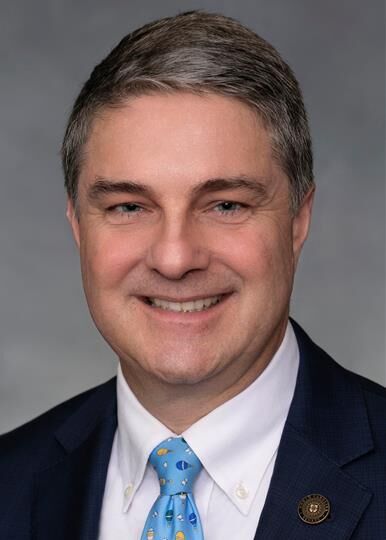
Sen. Warren Daniel (R-Burke, McDowell) is one of the primary sponsors.
Gov. Stein has until July 4 to veto the bill. He could also sign it into law or allow it to pass by inaction. The bill received bipartisan support, so a veto override would be a distinct possibility.
HOUSE BILL 369The Parking Lot Reform and Modernization Act is backed by environmental groups like Catawba Riverkeeper. Among other actions, it would ban the use of environmentally harmful coal tar pavement sealants.
It would also eliminate minimum off-street parking space requirements on new developments, thereby encouraging urban populations to increase their usage of public transit.
The legislation is currently awaiting action by the House Rules, Calendar, and Operations Committee. A House vote would be the next step.
SENATE BILL 428 and HOUSE BILL 850Both concern the state’s interbasin water transfer system.
Charlotte Water’s request to double the amount of water it is allowed to pull each day from the Catawba River Basin led lawmakers in the western half of the state to introduce legislation that would tighten the restrictions on interbasin transfers (IBTs).
Daniel is a co-sponsor of SB 428, which would require those requesting such transfers to meet a strict set of guidelines, including setting aside 10% of gross water revenues for infrastructure in the source basin.
Senate Bill 428 is pending in the Rules and Operations Committee.
Rep. Hugh Blackwell (R-Burke) is a co-sponsor of HB 850, which would place a moratorium on IBT requests until a UNC collaboratory can conduct a study of the transfer’s effects.
Currently, HB 850 has passed the House and the Senate Rules and Operations Committee. Some new language was added in the committee, and the bill’s next stop will be the House for concurrence on the added language.
The new provision would end the moratorium at a set date of March 21, 2027, instead of the six months after the submission of the study, which was the original wording.
SENATE BILLS 492 and 451Morganton City Council passed a resolution opposing both bills at the same time it came out against HB 765.
Senate Bill 492 loosens the building codes for multifamily residential buildings and is awaiting further action in the Senate Rules and Operations Committee.
Meanwhile, SB 451 reduces continuing education requirements on several construction-related licensing boards. It is currently awaiting action in the Senate Regulatory Reform Committee.
SENATE BILL 497The bill, dubbed “Expand Middle Housing,” would allow for the construction of middle housing — everything from duplexes to townhomes — areas previously zoned only for single-family residences.
Daniel has spoken in favor of the bill, saying it would help alleviate the current and projected housing shortage.
Senate Bill 497 is awaiting action in the Rules and Operations Committee.
HOP PROGRAM FUNDINGThe Healthy Opportunities Program (HOP) appears headed for shutdown since legislators cannot agree on a “mini budget,” which would fund some programs until the full budget passes.
In Burke County, C2Life, a company that makes and distributes healthy meals to more than 1,500 people through a partnership with Burke United Christian Ministries, relies on Medicaid funding through the HOP program.
The program also receives federal dollars, but they must be matched by state funds. If no funding is set aside by the state, the program would go on pause July 1.
The House delivered a mini-budget proposal, which did not contain funding for HOP, to the Senate. The Senate included $30 million, which would fund the program for six months, in its version.
The two bodies could not reach a compromise.