
Wine tastings aren't as complex as you might think

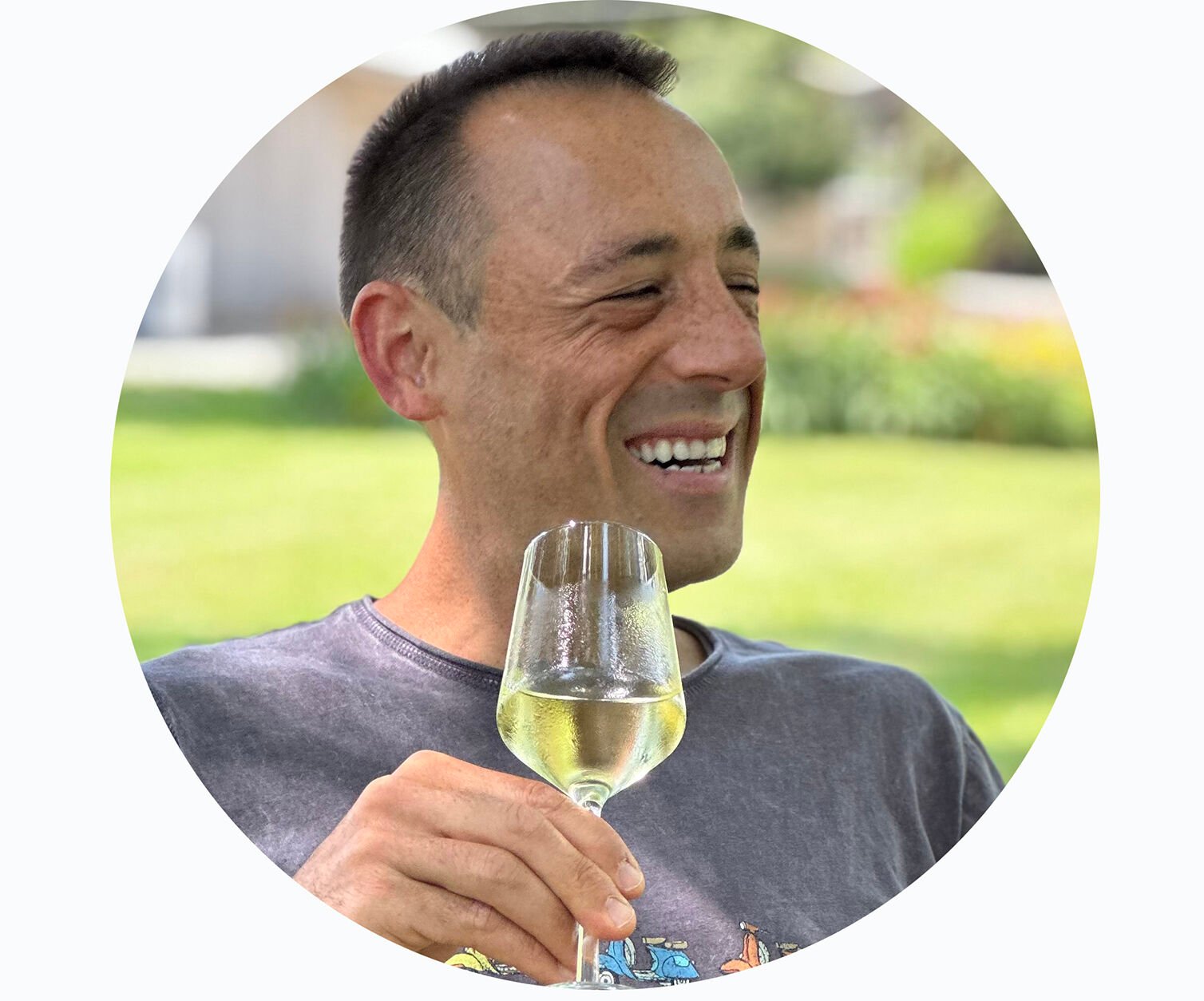
Chris Curtis, sales consultant with Winebow, talks to Melinda Hosier about the Argyle Vintage Brut 2018 during a past wine tasting at Craft’d. You don’t need to know anything about grapes to enjoy a wine tasting. Just bring your curiosity.
Everyone should be as lucky as we are to have a great wine shop like Craft’d that hosts weekly wine tastings — and for free or at a minimal cost. Too many of us don’t take advantage of these opportunities and so let me encourage you to change your habit in 2026.
This month, I’m going to tackle a series of myths, dos, and don’ts about wine tastings with the aim of making sure you are at the next one near to you.
MYTHS
Myth No. 1: I need to know something about wine to go to a wine tasting.
Absolutely not! Indeed, you’ll probably find quite a few folks belaboring their wine knowledge. My advice: Avoid them. What I usually hear from such folks is usually both loud and wrong. Instead, listen to and seek out the curious.
There’s about a 100% chance that I am going to ask more questions of the rep or host than anyone else at the tasting. Seek out the curious because they will also want to know what you are tasting and smelling and thinking of the wines in question. In fact, you are there to learn, so ask questions. Admit what you don’t know. I’m supposed to have all the answers, but I’m constantly saying, “I don’t know.” In the space of “I don’t know” lives the potential for new knowledge and enjoyment.
Myth No. 2: I don’t like the region/grape that is the focus of the tasting, so I should sit it out.
In fact, I often sit out tastings when the wines on offer are my jam. More often than not, wines that are showcased at a tasting are chosen because they’re exciting to the rep or the host.
For those of us who encounter dozens of wines a week, being excited about something can become quite rare and compels us to share. Maybe it’s a great value. Maybe it’s a different expression of the grape. Maybe the winemaker has made some interesting choices in the cellar (like carbonic Syrah!). I get excited about tastings when the wines on offer are things I’ve never encountered or will challenge me to reconsider biases I hold.
Now, let’s hop into some dos and don’ts. I’m pretty much a “you-do-you guy,” but that really only extends to the extent to which your-doing-you impacts others’ experiences. So, here are some important do nots:
DO NOTs
Do NOT No.: Wear strong smelling perfumes or colognes.
This rule is for your sake and even more importantly for others’ sakes. Depending on your personal taste and smell apparatuses, 70%-90% of what you taste is actually derived from what you smell.
If you’ve doused yourself with Gucci Guilty, you won’t actually be able to smell the wine. Worse, you will eventually become noseblind to your cologne or perfume; those tasting around you will bear the consequences even more than you. I have had too many tastings ruined because of someone else’s cologne overwhelming my aroma and taste sensors.
Do NOT No. 2: Brush your teeth.
You should always give yourself at least an hour, preferably two, between when you last brushed your teeth and when you wish to encounter wine.
Toothpaste has a compound called sodium lauryl sulfate that dulls your tasting receptors. The overload of the “minty clean” further overwhelms your taste buds. This overwhelm will block your ability to taste many of the nuances in a wine until your taste buds have recovered.
Do NOT No. 3: Proclaim your dislike for a wine.
This one really bugs me. Listen, no wine shop owner or wine rep planned a tasting hoping someone would say, “I really don’t like this.” We all have preferences. Our smell and taste receptors are all biologically unique to us. What I love, you may hate.
Importantly, tastings often become a social experience in which confident proclamations are transferred to less confident individuals. Don’t be the reason someone else perceives a wine differently because you put a bad bug in their ear.
As someone who pours a lot of wine, I can tell you that it’s also really off-putting when someone really loudly tells everyone that they don’t like something that you’ve chosen because you know some people, at least, will love it.
Do NOT No. 4: Expect drinking pours.
A standard tasting serving is 1-2 ounces. It’s for you to taste. And as Jancis always reminds us, tasting wine and drinking wine are two very different activities. Some tastings will have the option for you to purchase a glass of wine from the tasting for a full-glass pour, but that may not always be the case.
DOs
DO No. 1: Remember the tasting window is almost universally “drop in.”
If the tasting is set from 2-4, that means they’ll be pouring from 2-4. If you’re tasting three different wines, your time commitment is 10-15 minutes. Don’t hog the rep’s attention if there’s a line!
DO No. 2: Try to purchase something, if you have the means, from the shop.
Remember, the tasting is simultaneously a way to give you an opportunity to try three to four wines, but also an opportunity to get people in the shop — hopefully they buy a bottle of something while there.
DO No. 3: Bring your positive energy and say thank you to the rep or host.
When you’re pouring wine all afternoon and telling the same story about the grapes growing up tall poplar trees and having to be harvested by ladder, it can be hard to sustain energy and enthusiasm. But the eagerness on people’s faces who have good energy and hearing genuine thank-yous keeps the day enjoyable for your rep and host, which only makes the tasting a better experience for you and others.
See, nothing earth-shattering or scary. See you at the next one!
John Zimmerman earned the distinguished WSET Diploma with Merit in 2022, owns a WSET wine school in Morganton that offers WSET Levels 1-3 and in-house courses, and teaches wine locally and across North Carolina. John can be contacted for all things wine at www.ourdailywine.wine and john@ourdailywine.wine.