

The land, the memories, and the communion of saints

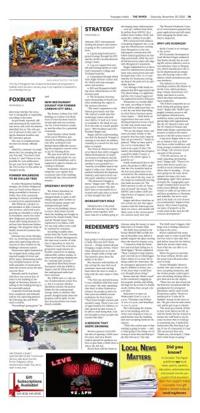
The house that anchored the Perkins Farm. This is the view showing the rear porches that faced the John’s River.
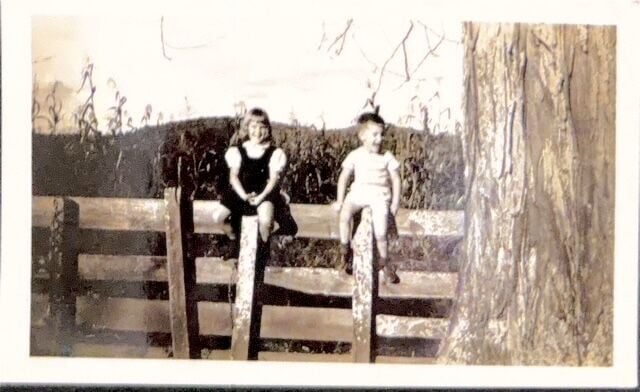
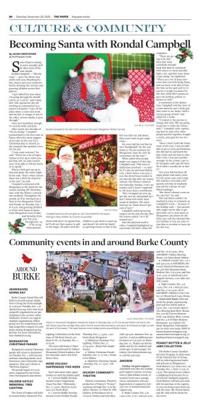
Author Judith Teele and her brother are shown sitting on the top of a rail fence during the autumn at Perkins Farm.
”To deeply name a place is to acknowledge its ecological liturgy.” — Robin Wall Kimmerer (Braiding Sweetgrass)
I can imagine them, Susie and Emmie, standing on the top-floor porch of their farmhouse. They would have been in mortal fear as they watched the tea-colored water of the John’s River rage around them. The house stood hard by the river. They surely had seen other floods like this. In fact, they kept a small canoe upstairs, hidden under a high four-poster bed, in case of a hasty exit.
But this flood of 1916 was unlike anything they had seen before. They watched as the grand piano in the front parlor floated almost up to the ceiling. Then Emmie gathered up Blackie, her favorite pet sheep, and Susie grabbed the Perkins Family Bible. Together, they somehow mounted the steps to the upper porch and waited.
Years later, my brothers and I would stare in rapt attention as Susie pointed out the etchings the rising water left on the wallpaper in the parlor. Her account of the flood and the escape to the porch only added to the wonder and magic of that place. We listened as the sisters told the details of it all … the sheep … the farm … the flood.
The Perkins Farm, the sprawling, 400-acre Pleasant Valley plantation, sat down a dusty road at the confluence of the Bost and the Piedmont roads. Their land once ran right up to the blacktop and ended near the banks of the John’s River. The river was named after Gentleman John Perkins. Susan Elizabeth Perkins and Emma Gordon Perkins were his great-granddaughters.

Some History
In 1752, John Perkins was 19 when the Lords Proprietors of North Carolina chose him to guide Moravian Bishop August Spangenburg through the western reaches of North Carolina. Young Perkins was a consummate Indian scout and crackerjack marksman. But most of all, he was a charmer and frontier salesman of the first order.
After camping in Quaker Meadows, the entourage made its way toward the mountains following an old Indian trail that would become N.C. 181. Then they somehow veered off into what is now the Globe. From there, they managed to climb the steep mountainside just on the other side of Blowing Rock.
The melancholy Bishop must have thought that he had fallen off the edge of the world. After navigating the rock outcroppings and rhododendron hells, Spangenburg was frightened and exhausted. He was probably wild with joy when at last the expedition plateaued out into the Yadkin Valley.
So grateful for safe moorings that he purchased the land for his Moravian colony on the spot. The Lord Proprietors, happy that Perkins had managed to close the deal, offered land as payment for a job well done. So, it came to be that a young John Perkins, now just barely in his twenties, walked off all the land that he wanted.
One hundred years later, my grandmother would come to that place, sit on the porch, and swim in John’s River with his great-granddaughter, Susie. They found a connection when at Peace College in Raleigh. When my grandmother moved to Morganton, their friendship deepened, and they became close and lifelong friends.
Susie and Emmie were inseparable sisters, neither one ever married. Their kindness and eccentricity live on in the stories of Burke County.
They worked and lived together on the land that they loved. A land that was written deep in their bones
Women running a farm
In that time period, it was uncommon for women to run every aspect of a very large farm, but Susie and Emmie did just that. They preferred the old ways. Eschewed modern technology and never owned a phone or drove a car. With no phone or car, they depended on Harry Kincaid. He described himself as a taxi driver, but he was much more than that. In essence, he was their chauffeur. He knew the exact time to arrive. Every Sunday, he took them without fail to the Presbyterian Church in town. If Susie came to visit my grandmother, we would drive out to fetch her, or we would tell Harry to bring her.
As devoted friends, my family and I often made trips to the Farm. On countless afternoons, I would visit with my grandmother. She, Susie, and Emmie would sit on the porch. I would listen to their stories, hear the lilt of their voices, and their laughter.
They were staunch Presbyterians. Never missing a Sunday. Countless Presbyterian families were welcomed to the farm on Sunday afternoons. The sisters were gracious hostesses. But the sour lemonade and hard, nearly tasteless gingerbread cookies were unappealing. We were told to be polite or, as my mother said as a warning, “for me not to part my lips about how bad Susie’s cookies are.”
The sisters were guided by more than Presbyterian doctrine and creed. The rhythm of the seasons, their farm and animals became their liturgy. They led, in my recollection, a simple sort of cloistered life. It created a contemplative space unimaginable in today’s world. They would have been aghast had I spoken of such things as mysticism or contemplative prayer. But they were indeed farmstead mystics. Their experience of the divine was in the ordinary miracles they saw around them each day.
I loved fall, best of all at the Perkins farm. I remember my brother and I running among the corn stalks and leaves in the fading October light.
Moving on, and returning
Once I left for college. I would never see the sisters or the Perkins Farm again. By the time I returned to Morganton in 1969, the sisters had died, and the land and farm had been sold. The farm and all of its contents were later destroyed by fire.
My favorite memories of fall lingered. In the fall of 1971, I would return, but not as I might have imagined.
That fall our 2-year-old son was diagnosed with a fatal disease. Six months later he was gone. During those months, I sought to find a peaceful space. Something to make my sheltering wing stronger. A place of renewal.
I took to driving in my car at odd moments, when I could get away. I rolled the window down no matter what the weather. Played the radio too loud. It was a kind of therapy. Car therapy. Alone, I wandered mindlessly, aimlessly around the backroads of the county trying to outrun that wrenching sadness.
Once, while driving, I found myself drawn as if a dowsing rod to the end of the Piedmont Road. Looked to see the dirt road that led down to the old Perkins farm. And later, for reasons that are still unclear to me, I would return in my car therapy travels. Later still, intrigued, one day I paused, got out of the car, and stood next to the gate. I thought of Susie and Emmie and the farmhouse now long gone.
I could feel the tranquility of the place at once; I smelled the pines and saw the dusty drive and the fall leaves. In some strong way, this land held the presence of the people that I had loved. It was a place from a safer time. All the long Sunday afternoons, the summers, on the porch.
In the wordlessness of that place, I knew something about time and about things that last.
The Apostles’ Creed is a part of the Presbyterian Church liturgy. We say that we believe in the “Communion of the Saints.” Believing that we are surrounded by all those who have gone before. The Perkins sisters would have recited that creed each and every Sunday. They trusted that we are encircled by “so great a cloud of witnesses.”
That fall afternoon, I sensed that powerful divine milieu. That place where we were all together, all of us, stitched together by the land that we loved. The timelessness of that place gave me strength for the days ahead.
Judith Teele is a Morganton resident and freelance writer who contributes occasional columns to The Paper. She may be reached at teelejudith@gmail.com.