
The coup d'etat at Bedford Hills
To date, you have been introduced to several members of the McDowell family, including Col. Charles McDowell, the eldest brother, and Joseph Jr., the younger sibling. These were not the only McDowells gathered at Quaker Meadows on Sept. 30, for at least two more, Capt. John McDowell and adopted son Capt. Henry Highland, joined them for the expedition south.
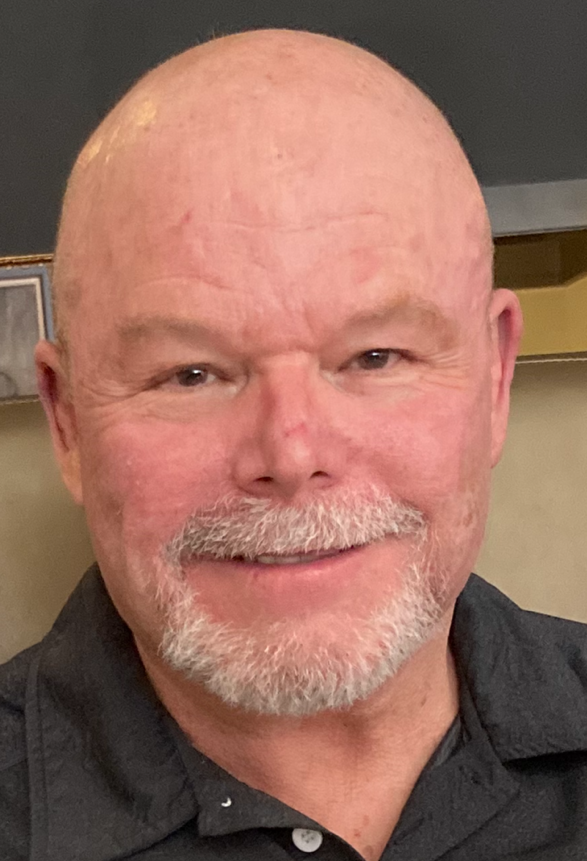
von Rohr
This group of 1,400 zealous militiamen traveled south but 16 miles that first day, staging their encampment at Bedford Hills. They remained there for two days because of a rain that just wouldn’t cease, giving them a continuing drenching. Traveling light, they didn’t have a single tent with them. Their only respite came when they would gather under trees to keep the raindrops from pounding them.
Recognizing that nature was not with them on this journey, they hoped for more favorable weather for their travel to come. While the leaves on the trees surrounding them were turning red and yellow, beginning to fall to the ground, a history-altering decision would be made that night, one that would deprive our own Quaker Meadows Colonel, Charles McDowell, of his expected command of the Patriot army.
Covered extensively in my new book “Ghosts of the Revolutionary War,” I was able to locate first-hand documentation that, without Charles McDowell present, the duo of Col. Andrew Hampton and Isaac Shelby held a covert meeting with other militia leaders, at which time these two initiated what I refer to as “The Coup d’etat at Bedford Hills.”
Whereas it appears that Shelby always considered McDowell a rival, Hampton had a personal grudge against McDowell for an incident that occurred months earlier at the Battle of Earle’s Ford, where his son, Noah, was killed by Loyalist soldiers. Quite simply, Hampton’s never forgave McDowell for what he considered it to be McDowell’s failure to properly secure the Patriot army at rest, with the result that his son perished at the end of a Loyalist bayonet.
After the political sabotage of McDowell’s reputation at the meeting, it became apparent (by a unanimous vote) that a new commanding officer would need to be appointed; however, before that role could be filled, they also needed a ploy to get rid of McDowell, so they came up with one. Members of the leadership group went to Col. McDowell and proposed he travel to Hillsboro, N.C., some 200 miles way, to seek a Continental Army general officer to lead them in their upcoming battle.
Whether Charles McDowell caught wind of the coup d’etat is unknown; accounts of his reactions to this proposal are also very sketchy. However, I have no doubt that he “saw the writing on the wall” and tactfully accepted his plight. It is possible that his brother, Joseph, advised him what was going on. This we do know: Col. Charles McDowell left the Patriot force on horseback that very night. His young brother, Maj. Joseph “Quaker Meadows” McDowell, would now assume command of both the Burke and Rutherford County regiments.
Other than a quick stop on what would have been his way to Hillsborough, at which time he stopped to speak to some South Carolina militiamen on their way to join the Patriot forces, there is no record of our colonel, Charles McDowell, ever reaching Hillsboro with the request to Gen. Horatio Gates. There are copies of the dispatch he carried with him. There is little doubt in my mind that Charles McDowell knew the battle would take place well before he had any chance to reconnect with the Patriot force.
After this second night of the journey, Colonel Charles McDowell’s record of military leadership ended abruptly. Any McDowell family glory to be achieved at the Battle of Kings Mountain would lie squarely in the lap of his 24-year-old brother, Maj. Joseph McDowell.
With our colonel, Charles McDowell, out of the picture, the leaders met again, at which time Col. William Campbell of Virginia was chosen to be the Commanding Officer. At 6-foot-6, he seemed like a likely leader, for he was known for his “aggressive mountaineering tactics.” Compared to Charles McDowell, who had been described by detractors as “too slow and methodical,” Campbell projected a leadership style better suited to the terrain on their horizon on the North Carolina/South Carolina border.
Under Colonel Campbell’s charge, the militia force could now continue its travel south to its final stop at The Cowpens.
Maj. (Dr.) John von Rohr is an academician and former military officer. He is a member of the Col. Alexander Erwin Chapter of the Sons of the American Revolution.