
A stroll in the woods, a detour into confusion

M. Matthews

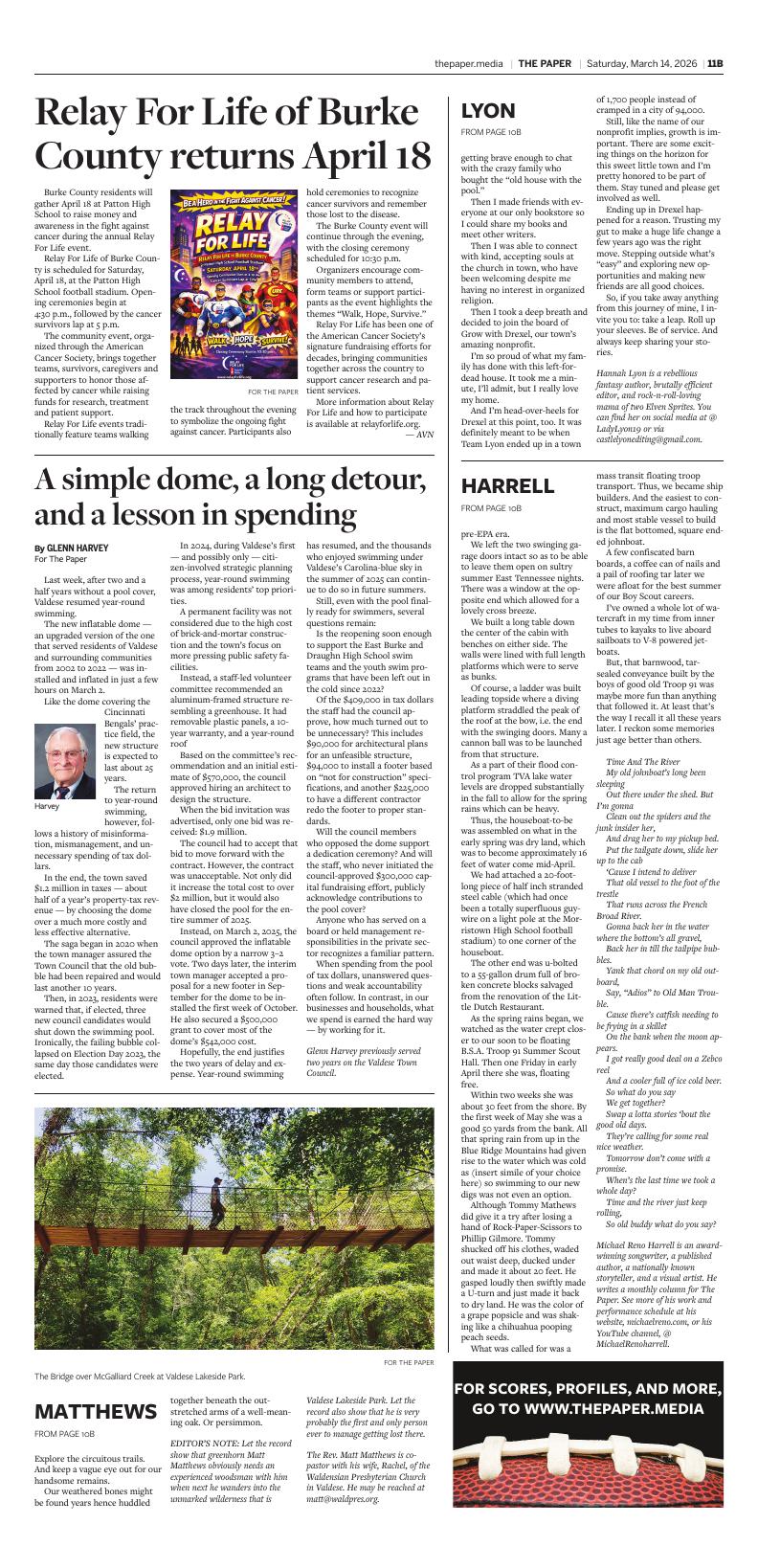
Restrooms, benches, and trail signs at Valdese Lakeside Park.

The Bridge over McGalliard Creek at Valdese Lakeside Park.

One of the many forested trails at Valdese Lakeside Park.
My wife and I took a stroll through the woods at Valdese Lakeside Park last week. Temperatures inched toward the 80s, and a soft breeze smelled of pine.
Hoyle Creek babbled delightedly. Bright sun riffled off the water like polished gold.
Scientists say a walk in the woods does a soul good. My soul was being done good.
Our brains benefit by getting outside, reports the magazine of Harvard Medical School.
“The aromatic compounds of the forest affect our immune systems,” Molly McDonough reports. “Dirt regulates the microbiome of our guts.”
We crunched over the path padded by dead leaves that skirted the creek. We trod in and out of solid sun splotched with geometries of shade. The damp and heaviness of the earth felt solid underfoot. I don’t notice how the ground feels at the grocery store, but on the trail, I measured the impact of my steps.
I should have been looking up more frequently, paying attention to my surroundings. Instead, my eyes were locked on the ground, making sure I didn’t face-plant over a root, risking a deregulation of my microbiome with a mouthful of dirt.
At least I should be identifying the fallen, brown leaves, right? Oak? Maple? Sequoia?
Truth be told, I’d rather take an urban speed walk through the bowels of a city. I like people-watching, taking in the architecture and public sculpture, tipping buskers, managing curbs, chasing light through canyons of shade, and window-shopping.
In the woods, I can’t tell a persimmon from a rhododendron.
I do prefer birdsong to revved-up mufflers, and glad birds tweeted arias in these woods with silken affect.
On one of the rare occasions I glanced skyward, I observed an eagle-sized nest made with practical Lincoln Logs, large enough for a Tetradactyl. Its occupants were not home.
The thing I enjoy most about a long walk, besides the companionship, is how the noise in my brain gets quiet. According to Harvard, people who frequent the woods experience reduced activity in the regions of the brain implicated in rumination or getting stuck in a rut.
My repetitive cycle of pesky, negative thoughts unraveled bit by bit and fell away with each step. On the trail, I’m just walking.
Brain off.
Ears open.
Breathing deep.
Eyes peeled.
Our hemmed-in trail through the forest opened at the amphitheater where I spied a man sitting alone at a picnic table murmuring into a radio that beeped and whizzed. I heard a mechanical tapping, like morse code.
He could have been a Ham radio operator, but I can’t tell a ham from a salami. The obvious explanation of his solitary presence was that he was conspiring to take over the world.
“Hike” is a more accurate word than “stroll,” and by the end of our excursion, at the four-mile mark, topping nine-thousand steps according to the electronic devices that measure our respiration, glucose, heartrate, and every movement, we were really huffing.
Part of what upped our collective blood pressure was, after the halfway mark, we had no idea where we were.
We traipsed successfully from starting point around the purple Hoyle Creek Trail to the restrooms at the main parking lot. The wide, flat Greenway Trail took us from there along the lake where we strode like seasoned through-hikers on the Appalachian Trail.
A left at the yellow Rostan Trail drove us uphill back into the friendly woods where we planned to find the light green Shade Seeker Trail that would hook us back up with the purple Hoyle that would return us to the parking area in which our Subaru awaited us.
That was the plan.
But to reach the light-green Shade Seeker Trail required a leftward jaunt on the Red Outer Loop Trail, and that required a brief passage along the pink Hollipop Trail. This we gleaned from a posted trail map near the lake. Keeping it straight was beginning to strain my internal GPS.
I could not easily tell the pink trail blazes apart from the red ones unless I saw them side by side. We ended up turning left and veering rightish onto a path that was decidedly not an official trail except, perhaps, for deer and local grizzlies.
As best I can tell in looking back, the non-trail inserted us somewhere into the middle passage of the orange Tributary Trail, which leads to Detroit.
At only 300 acres, Valdese Lakeside Park is no Yellowstone. A straight walk in any direction will lead the hapless to a road, the flat trail along the lake, or onto the campus of Jimmy Draughn High School.
You can’t be lost for long if you walk a straight line. Our problem was we kept walking in circles.
I wasn’t worried. But I was growing impatient. I had begun contemplating a late lunch at the Standard Oyster Company, about which I had read in a restaurant review in that morning’s edition of The Paper, and I was hungry. One more step in the wrong direction put me a few more minutes away from a dozen fried oysters.
In the very back of my brain, I entertained the fantasy that we might not make it out of these gregarious woods.
If my wife and I ever go missing, enjoy a long walk at Valdese Lakeside Park and remember us. Explore the circuitous trails. And keep a vague eye out for our handsome remains.
Our weathered bones might be found years hence huddled together beneath the outstretched arms of a well-meaning oak. Or persimmon.
EDITOR’S NOTE: Let the record show that greenhorn Matt Matthews obviously needs an experienced woodsman with him when next he wanders into the unmarked wilderness that is Valdese Lakeside Park. Let the record also show that he is very probably the first and only person ever to manage getting lost there.
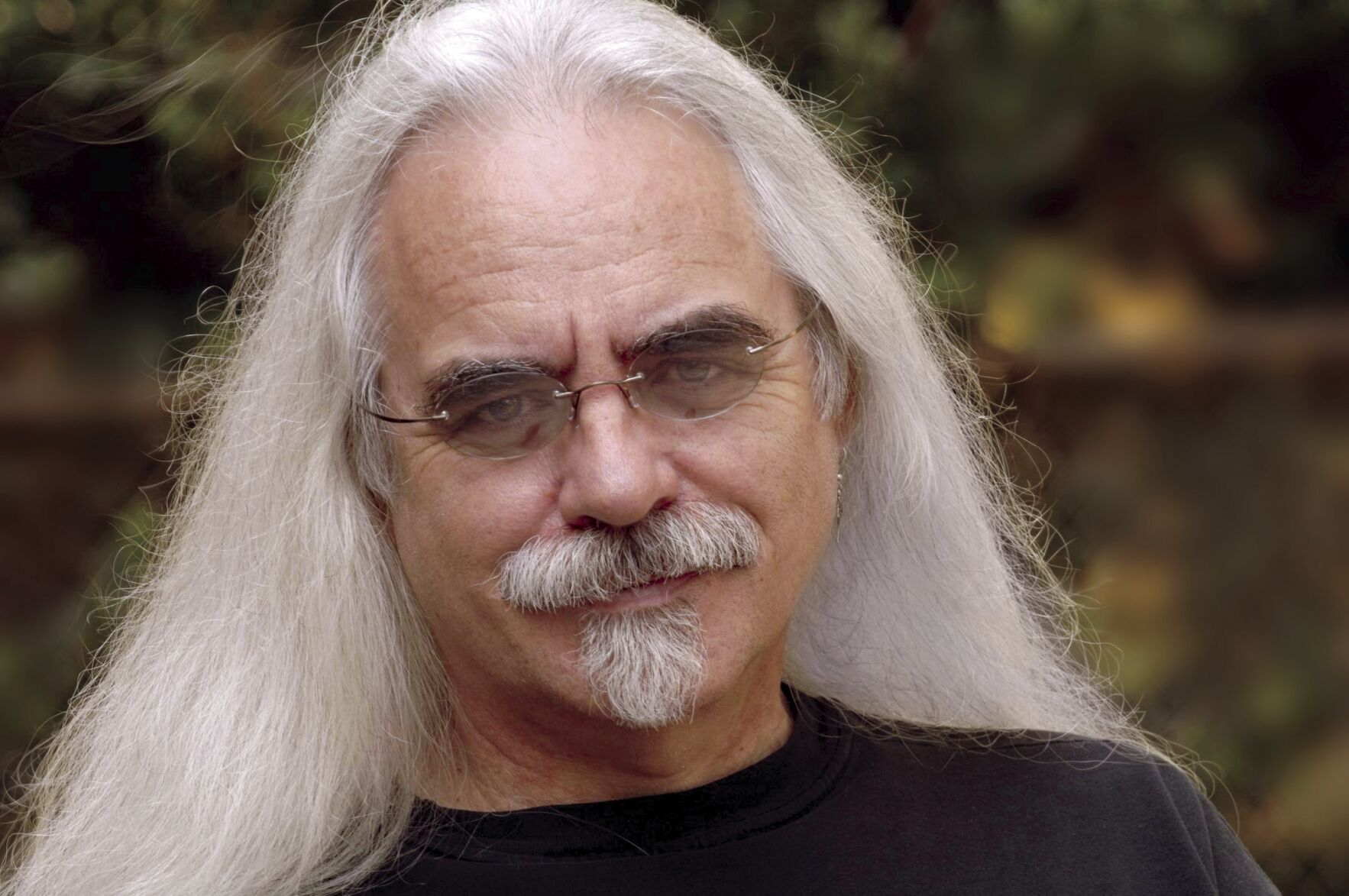
The Rev. Matt Matthews is co-pastor with his wife, Rachel, of the Waldensian Presbyterian Church in Valdese. He may be reached at matt@waldpres.org.