
Morganton targets weak points in city water system
-
Allen VanNoppen
Publisher


North Carolina’s economic momentum depends on something most people never see until it breaks: water and wastewater infrastructure.
That is the warning at the center of a new “Water Infrastructure Competitiveness Analysis” commissioned by the North Carolina Chamber Foundation, which argues that aging pipes, limited treatment capacity, and outdated water data are increasingly becoming barriers to business growth, housing expansion and long-term investment. Preventing breakdowns, the report says, requires not just repairs, but coordinated planning and sustained funding.
In Morganton, the strain is showing up in public.
A city-maintained roster of infrastructure disruptions posted throughout 2025 reveals nearly four dozen public alerts involving water outages, water main breaks, power failures, internet outages, and at least one sewer issue. The majority — 29 incidents — involved water disruptions, including repeated main breaks and emergency repairs. A noticeable spike occurred in June, when the city issued 11 alerts, many tied to water outages.
But city officials say the numbers do not tell the full story.
“Leaks aren’t always due to aging pipes,” Water Resources Director Brad Boris said. Heavy rains, vehicle accidents, and customer behavior contribute to infrastructure failures. Residents dumping grease or other disruptive substances into drains can cause blockages or backups, he said.
City Manager Sally Sandy said the disruptions have not limited growth or forced the city to turn away development.
“We’ve never turned away a business here because we didn’t have infrastructure to serve them,” Sandy said. “We’ve never not been able to react to what’s been necessary for that, no matter whether it was a commercial business, residences, or industrial.”
Within the city limits, Morganton has 330 miles of water pipes and 200 miles of sewer pipes, some dating back 50 or 60 years, Boris said. The majority of the oldest sections are in the downtown area, he said.
The contrast between the Chamber Foundation’s statewide warning and Morganton’s day-to-day experience reflects a growing tension for local governments: water systems can still function well enough to support growth while showing increasing signs of strain, especially in distribution lines that fail unexpectedly.
“Today, water infrastructure is recognized as a pivotal factor that can delay, or even halt, proposed developments if not addressed proactively,” the Chamber report states, describing a shift from water service being an engineering challenge to becoming a major economic constraint.
Across North Carolina, the situation is driven by scale and age. The report notes the state has nearly 5,867 public water systems and more than 3,600 wastewater systems, many of them aging and financially fragile. It cites the Department of Environmental Quality’s estimate that North Carolina needs $5.2 billion for wastewater and sanitary sewer investment and more than $10 billion for drinking water infrastructure.
The report also highlights a troubling trend: Utilities often operate reactively rather than proactively. A 2024 survey referenced in the report found more than half of utilities said they do not engage in long-term supply or demand forecasting, and nearly one-fifth reported that current revenues are barely covering basic operations, debt service, and reserves.
That strategy can translate into the disruptions residents experience directly as outages, service interruptions, and emergency repairs, according to the report.
Morganton’s 2025 roster of infrastructure events includes multiple water main breaks that shut down service to residential streets, power outages affecting electric customers, and disruptions to internet and phone service. It underscores how infrastructure systems often fail together.
Sandy said those incidents should not be interpreted as signs of system failure, but rather as a normal part of operating any municipal water system.
“Water outages in a water system, I don’t care how old it is, are normal and typical,” Sandy said. “If the goal is to think that if you went out and spent $500 million and replaced everything tomorrow, then you’re not going to have any, (it’s) unrealistic, not true.”
The city’s water resources director, Boris, said Morganton’s ability to keep growing depends on maintaining what the public rarely sees.
“I’m a little bit biased because that’s what I do, but people don’t realize that far more assets are under the ground,” he said, adding that he has worked for other communities that prioritized only visible improvements. “They had beautiful sidewalks, wonderful festivals, wonderful building facades, but a water line break, that’s the quickest way to disrupt, and people will remember that.”
Boris said Morganton has been able to support major economic development because it focuses on what is underground as much as what is visible above ground.
“We’ve got to remember the buried assets,” Boris said. “All the park benches, all the pretty stuff that people see, that sells your community, but the weakest link is what you don’t see.”
He pointed to the city’s $2.1 million water and sewer infrastructure project planned along Albert Tron Boulevard, with $700,000 funded by the Appalachian Regional Commission. The project is needed for the development of a hotel and restaurant behind the LongHorn Steakhouse on South Sterling Street, Boris said.
“So, it’s more of a concentrated effort now where we have problems, and it’s worked well,” Boris said. “But at some point, there’s going to be some intervention in the heart of downtown, and that’s what we’re trying to plan for.”
Boris said Morganton’s situation reflects a broader reality described in the Chamber Foundation report: that local governments often face enormous long-term costs even when systems appear stable.
There is “not a city in the country that can afford to dedicate that much money to overhauling their water system,” Boris said. Even after full replacement, he added, problems would still occur. “You can completely replace every inch of pipe in a distribution and collection system, and you’re still going to have blockages, hydraulic issues,” and other problems unrelated to pipe age.
The Chamber Foundation report argues that reliability is increasingly tied to economic competitiveness. Businesses can face significant unplanned costs and operational disruptions without dependable water and wastewater systems, while communities with strong infrastructure have an edge in recruiting jobs and development.
For Morganton, where public alerts show repeated strain on water distribution systems, the statewide report offers a broader framing: infrastructure disruptions may not yet be limiting growth, but they are reminders of systems that require constant maintenance, long-range planning and sustained investment.
Municipal reporter Madison Lipe contributed to this story.
Allen VanNoppen is the publisher. He may be reached at 828-445-8595 or allen@thepaper.media.
Related
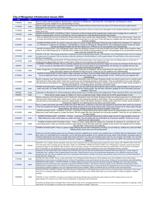
Log of 2025 infrastructure disruptions in Morganton