

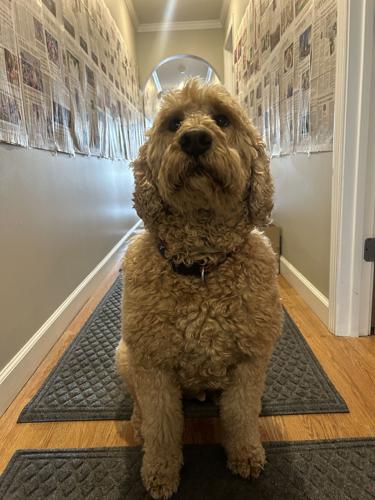




If only my fine friend and boon companion Bo the Wonder Dog and I had been partners back in the early 1960s.
I’d have a lot more cash in my wallet and the two of us would be riding around in a limousine rather than my cramped Kona.
In case you’ve forgotten (or were perhaps born 30 or 40 years later), the early 1960s marked the peak of anthropomorphism, (I’ll give you a minute to look that up) when animals were among the biggest stars on network television.
As a quick aside, it was also the era when Bugs Bunny had a primetime show on ABC. Bugs Bunny in primetime! JFK was in the White House and American culture was at its peak.
But back to real animals rather than cartoon drawings.
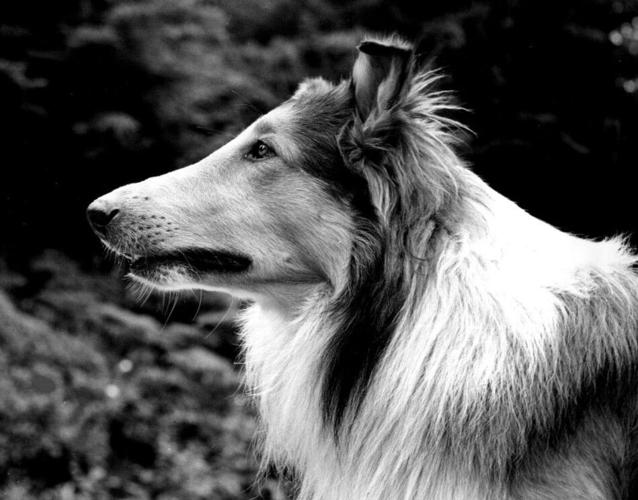
The head canine of the era was Lassie, who mostly hung around with a young lad named Timmy.
Although apparently a normal kid in all other respects, Timmy had a propensity for falling into old wells.
Fortunately, he always landed safely at the bottom, neither smashing his head on a rock on the way down nor drowning in 12 feet of nasty, leech-infested water.
Lassie, who was obviously far smarter than Timmy, never fell in the well, but was implored by Timmy to, “Go for help, Lassie! Go for help!”
Now if Bo and I were strolling through a grass-covered field and I dropped out of sight into an open well, Bo would either:
(A) Plunge in right behind me, thinking a good dunk in nasty water would be fun. Or,
(B) Stretch out in the grass, have a good nap in the sunshine, and wait for other, more heroic dogs to come along and perhaps notice me.
I’m pretty sure when it began to get dark, Bo would simply go on home and head for bed, whether I had been rescued or not.
A side note of interest. Lassie was the first crossdresser on network television.
A total of nine different dogs portrayed Lassie over the TV series run of 18 years. All nine of those dogs were males, even though Lassie was supposed to be a warm-hearted, loving, female dog.
I guess they had to be awfully careful with those camera angles.
The premise of some of the other animal shows of the period proved too stupid to bear watching, even for me, a poor Drexel child.
There was “Flipper,” which focused on a bottlenose dolphin who lived in Florida and provided the same sort of rescue service that Lassie provided Timmy, only from swamps, rip currents, and souvenir stands.
Flipper could never hold water with me because he liked to rise up out of the water and yell at every human in sight. Unlike the soothing bark of a dog, however, Flipper spoke only authentic frontier gibberish understood by absolutely no one.
And here’s the kicker. Turns out Flipper was too stupid to even say a word. His speaking parts were actually dubbed in and were in fact spoken by a “laughing kookaburra,” an Australian bird.
An Australian bird!
And no, I am not making this up.
Finally, among the too-dumb-for-even-an-8-year-old shows, there was “Gentle Ben.”
Ben was an enormous black bear who hung around in the Florida Everglades with an obnoxious little kid portrayed by Clint Howard, who grew up to be the world’s ugliest man.
Ain’t no way a real bear wouldn’t have eaten that brat for breakfast, Episode One, Season One. Over.
Which brings us, of course, to the greatest animal star of all time, one Arnold Ziffle, the only son of Hooterville denizens Fred and Doris Ziffle in the CBS series, “Green Acres.”
Arnold didn’t look much like his parents.
Arnold was a pig.
It was never made clear whether Arnold was adopted or if Fred and Doris really were his birth parents.
As Hamlet might have said, “There are more things in Heaven and Earth, Horatio, than are dreamt of in your philosophy.”
Arnold loved to watch TV and had his favorite shows.
Despite the TV habit, Arnold was highly intelligent and meticulously studious. He finished at the top of his class at Hooterville High.
Arnold rode the school bus when he wasn’t driving it, was a welcome voice of reason at town meetings, had written an unpublished novel, played the piano quite well, and was the best checker player in the county.
He never rescued kids from wells or urchins from the murky Everglades, always having more important tasks to attend to.
Maybe that was the real secret to success in that golden age of animal stardom.
It wasn’t about dragging some dimwitted kid out of a well or chattering nonsense from a mangrove swamp. It was about knowing your strengths — and more importantly, knowing when to stay out of trouble in the first place.
Which brings me back to Bo the Wonder Dog.
Bo has never rescued me from anything more perilous than an overcooked pork chop, and even then his motives were suspect.
He has never alerted authorities, solved a mystery, or, to my knowledge, enrolled in high school — let alone graduated at the top of his class.
But he does possess one trait that all those famous television animals seemed to lack: honesty.
Bo has never pretended to be anything other than what he is — a slightly lazy, highly loveable, thoroughly dependable dog when it comes to mealtime and not much else.
And maybe that’s why, had we been around in the early 1960s, we never would have made it to primetime.
No scripts, no heroics, no dramatic rescues — just a man and his dog, sitting in the grass, minding their own business and avoiding open wells altogether.
Come to think of it, that might not have been such a bad show after all.





























(0) comments
Welcome to the discussion.
Log In
Keep it Clean. Please avoid obscene, vulgar, lewd, racist or sexually-oriented language.
PLEASE TURN OFF YOUR CAPS LOCK.
Don't Threaten. Threats of harming another person will not be tolerated.
Be Truthful. Don't knowingly lie about anyone or anything.
Be Nice. No racism, sexism or any sort of -ism that is degrading to another person.
Be Proactive. Use the 'Report' link on each comment to let us know of abusive posts.
Share with Us. We'd love to hear eyewitness accounts, the history behind an article.