Sorry, your subscription does not include this content.
Please contact your publisher to upgrade your subscription.
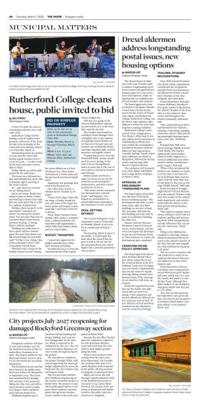
LISA PRICE / THE PAPER
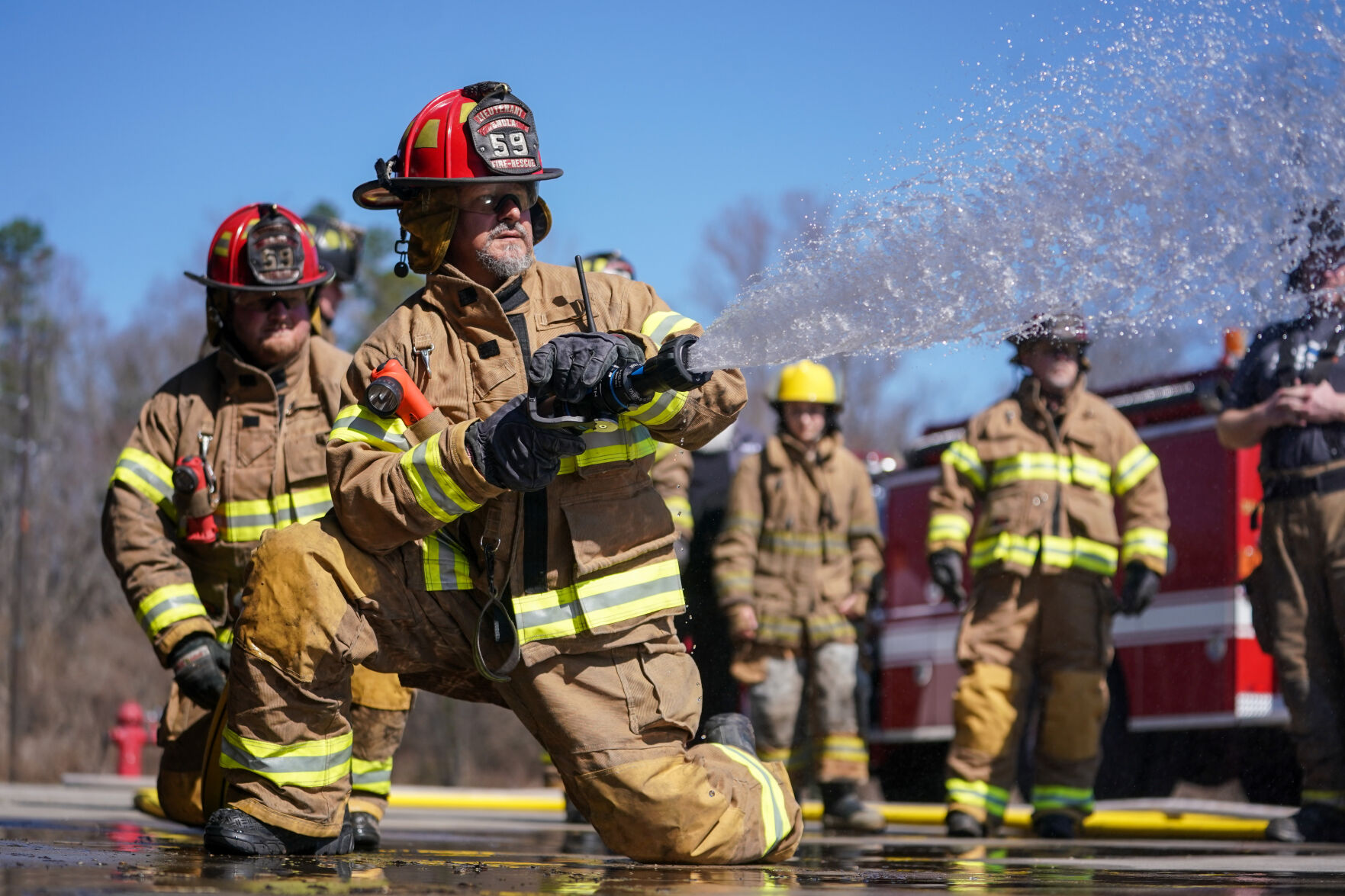
Enola Fire-Rescue Department Lt. Robert Smith demonstrates the
newest fire nozzle technology during a hands-on training on
Saturday, Feb. 28. The Enola Fire-Rescue Department received a
$20,000 donation from the HEN Foundation to equip three engines,
one bush truck, and two wildland UTVs with the new nozzles. See
more photos on Page 15A.
ENOLA GETS FIREFIGHTING UPGRADES
Page A1 | e-Edition | The Paper
LISA PRICE / THE PAPER
Enola Fire-Rescue Department Lt. Robert Smith demonstrates the
newest fire nozzle technology during a hands-on training on
Saturday, Feb. 28. The Enola Fire-Rescue Department received a
$20,000 donation from the HEN Foundation to equip three engines,
one bush truck, and two wildland UTVs with the new nozzles. See
more photos on Page 15A.
ENOLA GETS FIREFIGHTING UPGRADES
Education
Two NCSSM-Morganton teachers honored for contributions to students, programs
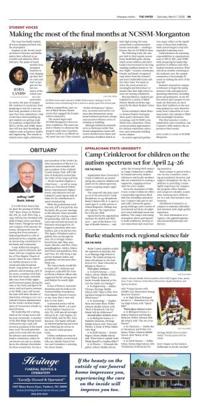
Courtney Long explains how a tool is used to a student.
JACOB CHRISTOPHER / THE PAPER
From molding clay sculptures to building underwater robots at Lake James, two NCSSM-Morganton teachers have earned statewide recognition for shaping innovative programs that blend creativity, science, and hands-on learning for their students.
CLASSROOM INNOVATION
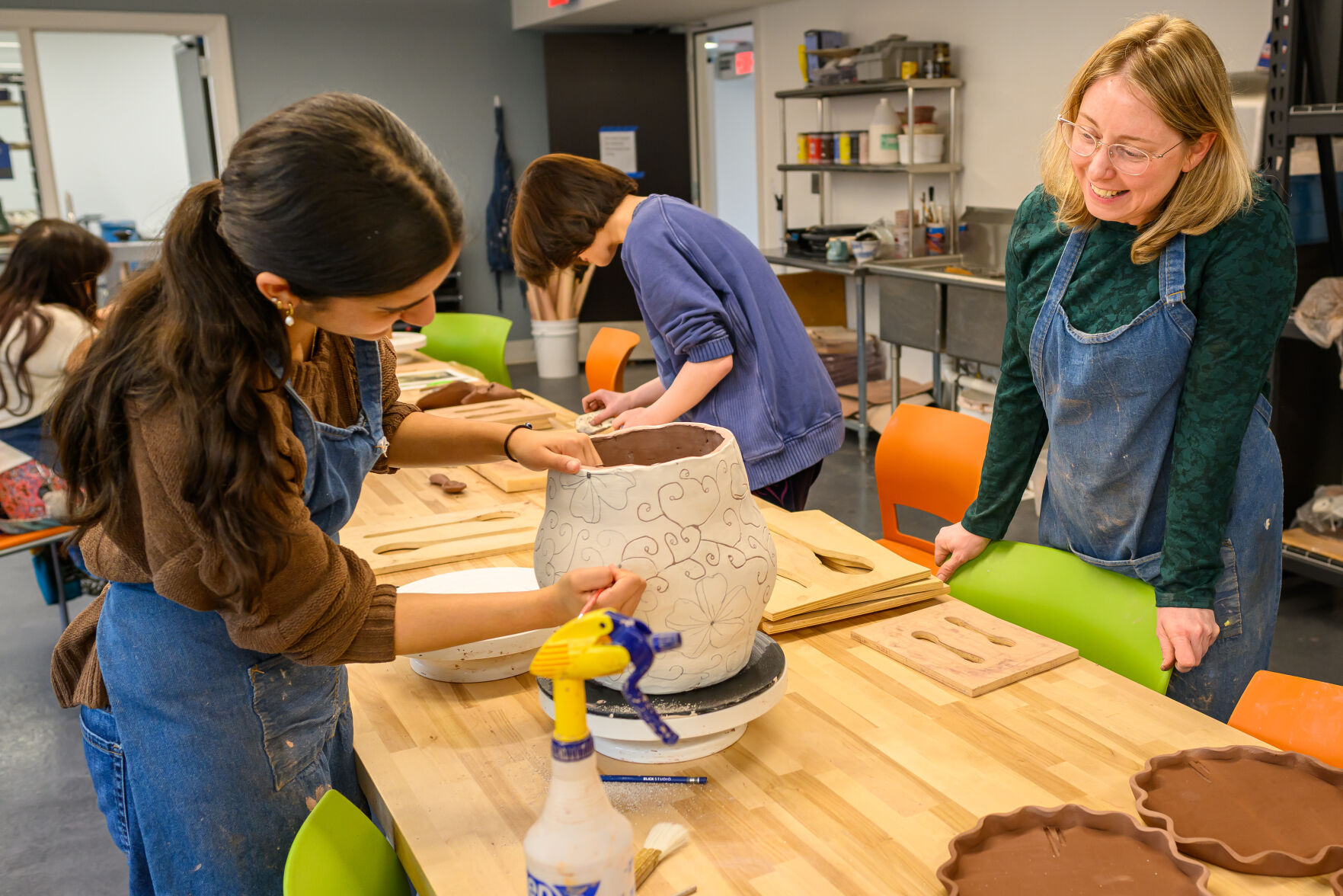
Courtney Long, the instructor of visual arts and a recipient of the 2026 NCSSM Exceptional Contribution Teaching Awards, held a different tool at any given glance, coaching the students in their use and demonstrating along the way.
A student details a pot while Long watches.
JACOB CHRISTOPHER / THE PAPER
“I focus on quality, not quantity,” she said, gliding between rooms to explain how the students use kilns, raw materials, and other scientific approaches to developing art.
Long received the award in Classroom Innovation, a move she attributed to her development of the arts program.
Long joined NCSSM in June 2022 as part of the first cohort at the campus, first teaching art in a physics lab before moving to a study room and finally ending up in the newly finished Joiner Hall.
Courtney Long hands off a tool to a student.
JACOB CHRISTOPHER / THE PAPER
Along the way, she collaborated with science and humanities teachers, due to their proximities to her classrooms.
“One of the things about innovation is collaboration,” Long said. “Also thinking creatively about the spaces that I was working in. … I had to think creatively about how to deliver the curriculum without tools or equipment, and I had to collaborate with the community.”
She said in the early days, she worked with West Union Art Studios to use their kilns, and she used her glaze lab at home.
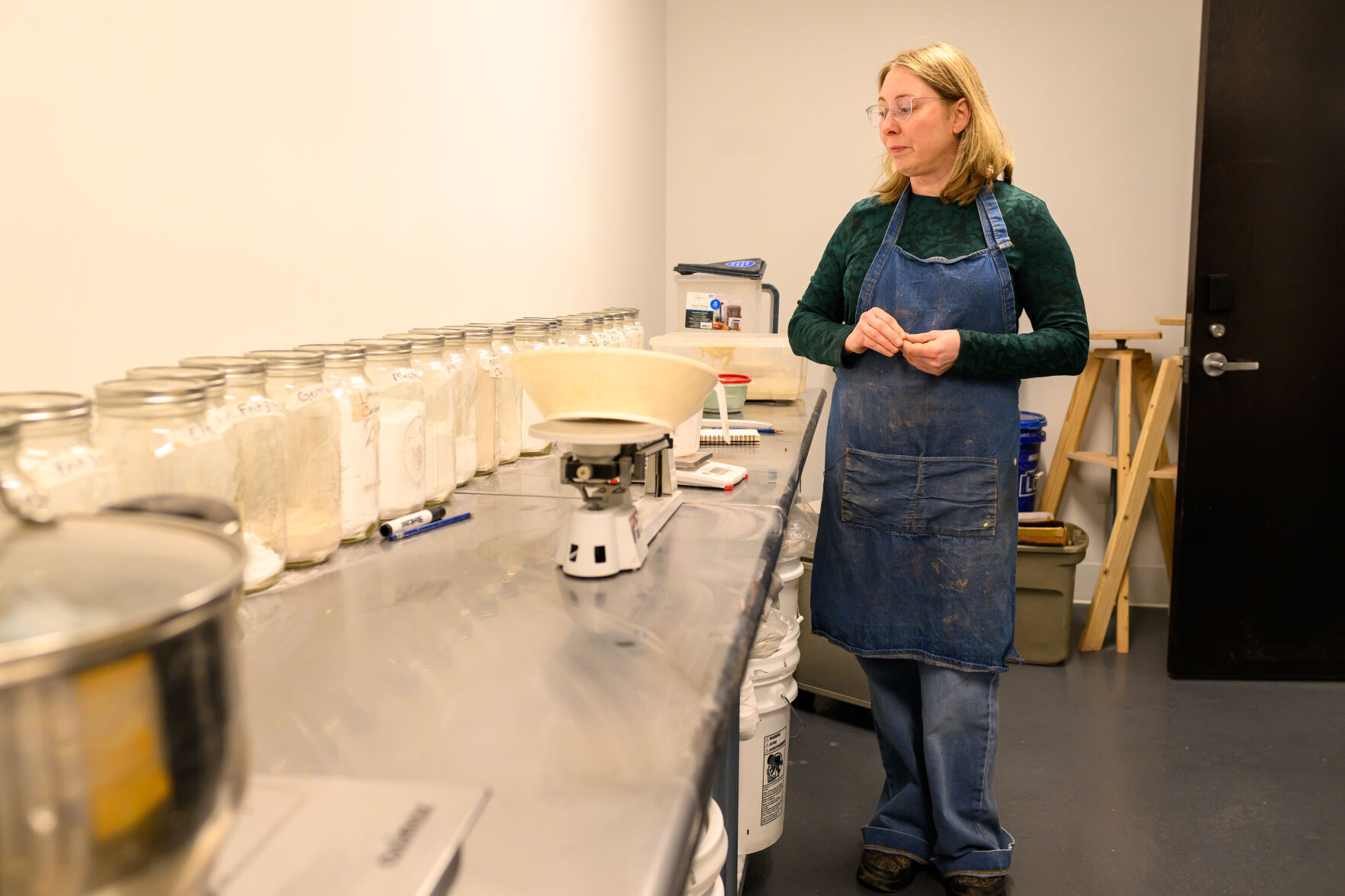
As the school grew, she requested specific equipment to accommodate student needs and worked to integrate STEM (Science, Technology, Engineering, and Math) learning through interwoven studies with the chemistry department and the school’s raw materials instructor.
Long shows the various tools and raw materials her students work
with.
JACOB CHRISTOPHER / THE PAPER
Depending on the room students are in, they directly work with different bases, paints, kilns, and tools. For Long, it boils down to the art they create at the end of the day.
“I only get them so many hours a week and this might be the last art class that they ever get to take,” she said, presenting two-dimensional drawings of sunflowers, pears, and skulls. “I want them to leave here with some kind of family heirloom in a way — something to be cherished and hung and kept. I want the work that they draw to be long-lasting and meaningful.”
SERVICE TO STUDENTS
Long wasn’t the only Morganton-based NCSSM teacher to receive recognition for Exceptional Contribution. Matt Hilton, the instructor of computer science, also earned bragging rights and a small monetary award for Service to Students.
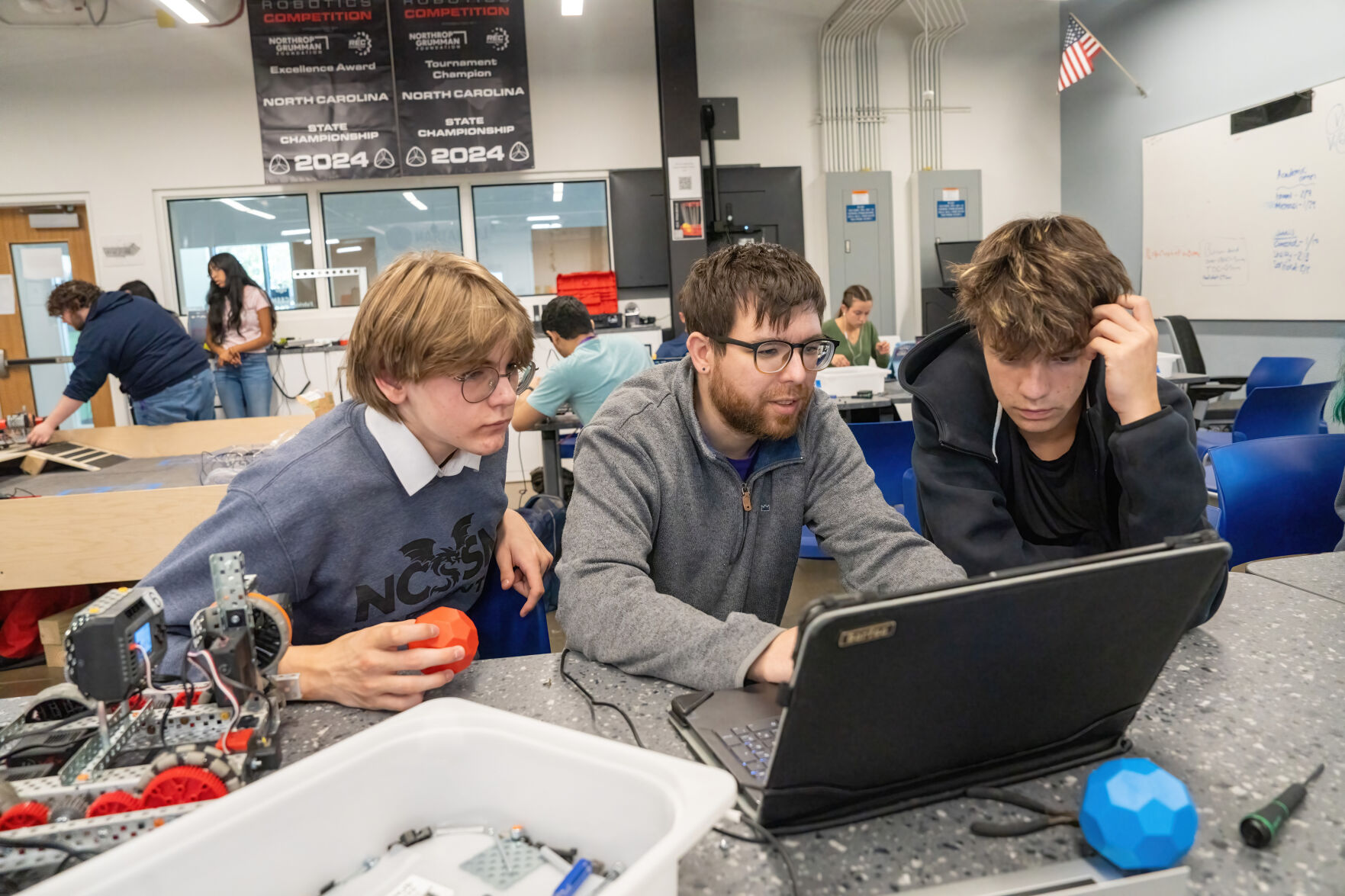
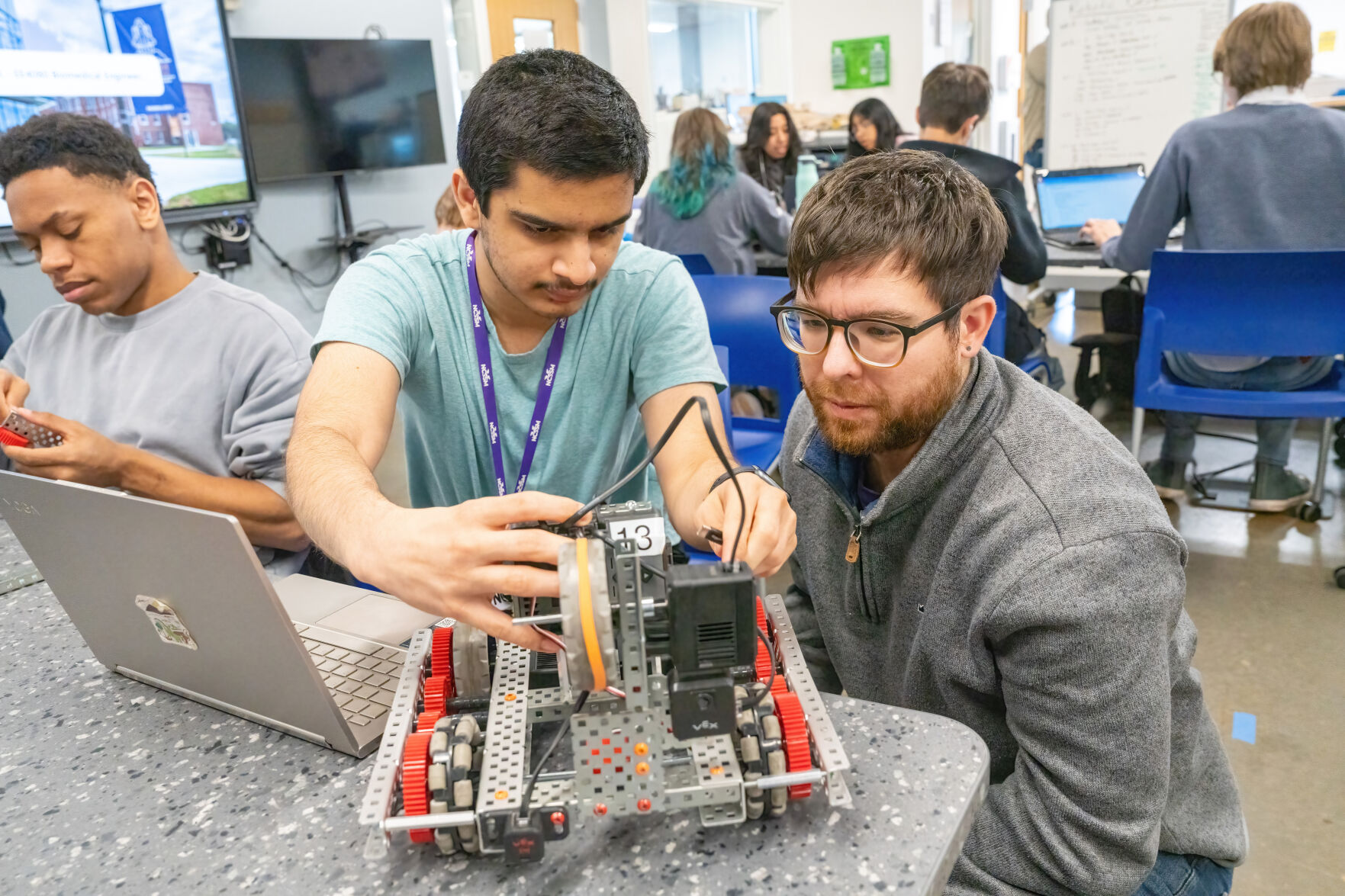
Two robotics students observe as Matt Hilton explains a process
using a laptop.
John Hansen / FOR THE PAPER
Hilton, who entered NCSSM-Morganton as a teacher in 2022, is heavily involved in the robotics teams and helped to build much of the engineering and computer science department.
According to Hilton, the demand for robotics was greater than expected when he started.
“We realized very early on, within the first couple days of actually having students on campus, the need and the want from the students for competitive robotics opportunities to the point that we had a standing-room-only interest meeting in our large American studies room,” he said.
Since then, Hilton has overseen teams, providing 50 to 60 students access to three competitions covering first-time team challenges; VEX robotics, a curriculum designed for students to learn different STEM skills; and underwater robotics.
One project he highlighted is a several-year-long project at Lake James, developing an underwater, remote-operated robot with the Lake James Environmental Association.
Matt Hilton watches as a student builds a robot.
John Hansen / FOR THE PAPER
“Through those things, I think that’s kind of where the award came from,” Hilton said. “How heavily involved with students — to help them develop leadership skills and provide opportunities for them to implement their knowledge in a wide variety of areas and also making it a welcoming environment.”
BOTH RECIPIENTS
Long and Hilton both plan to continue collaborating, putting resources together with other departments to develop new opportunities for students.
“My students can try anything, but if it doesn’t work out, they learn more if it doesn’t go successfully,” Long said. “We ask ourselves why it wasn’t successful and then we make another and we try again.”
Valdese
Valdese Police Chief says inadequate pay, too few officers, and no facility are department's biggest issues
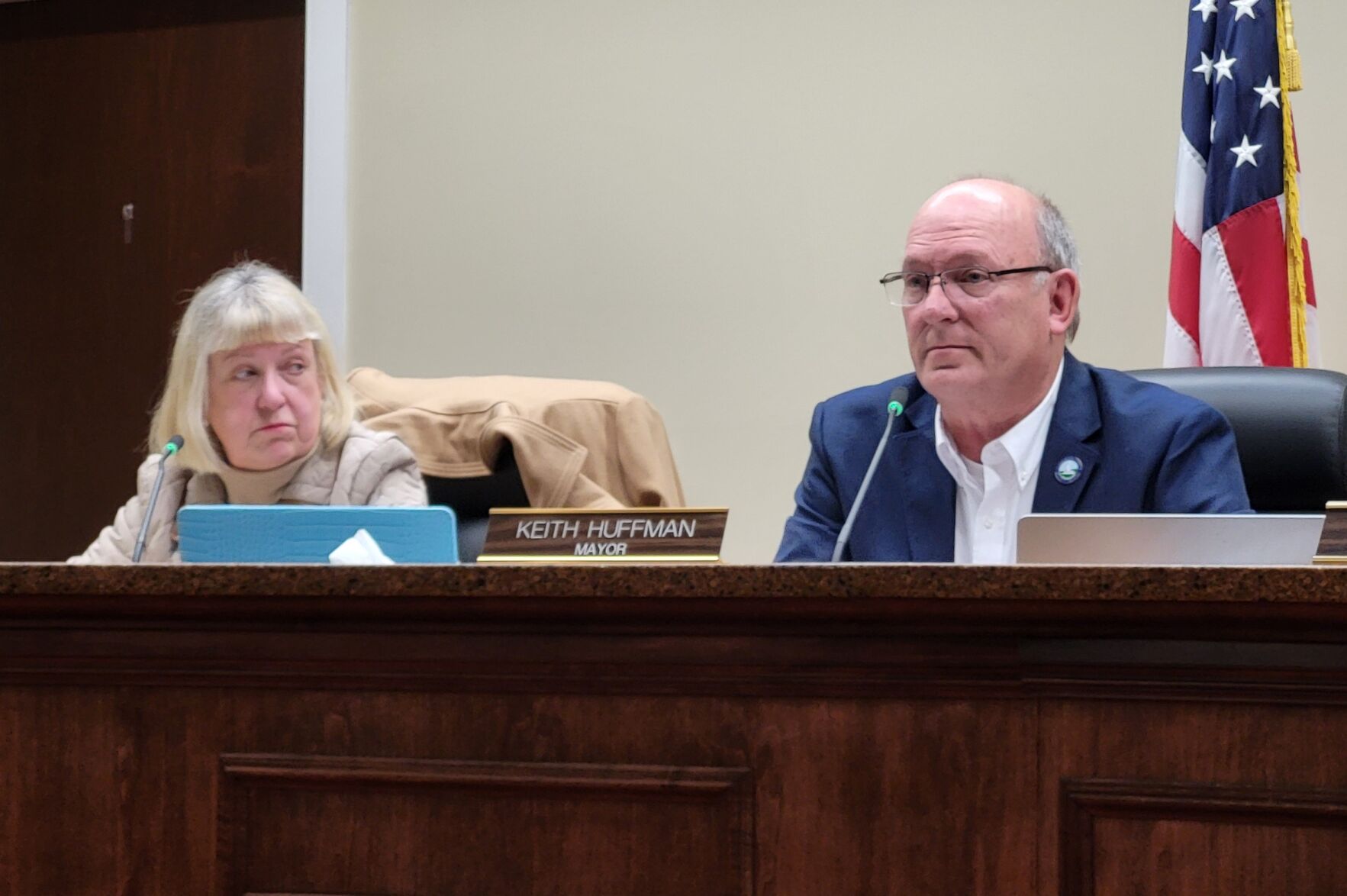
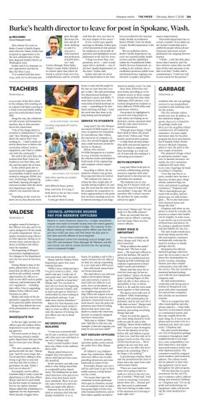
Valdese Mayor Keith Huffman assured Police Chief Marc Sharpe the
council would do everything in its power to help as Mayor Pro Tem
Rexanna Lowman looked on.
MICA BANKS / THE PAPER
Valdese Chief of Police Marc Sharpe had the council’s full attention on Monday as he used his state of the department presentation to emphasize the police department’s biggest challenges: too few officers, too little pay, and the lack of a proper facility.
At every meeting, the Valdese Town Council hears a presentation from a department head, typically covering recent accomplishments, statistics, and goals moving forward. Most are no longer than 15 minutes.
Sharpe’s lasted at least an hour.
Sharpe was respectful but firm in his address, giving every listener real examples of the struggles caused by having so few officers, low pay, and no location designed to fit the needs of a police department. His examples included losing officers to other agencies, having no interview room, and storing evidence in facilities that barely meet the standard.
The beginning of Sharpe’s presentation highlighted positive changes in the department over the two years he has been chief.
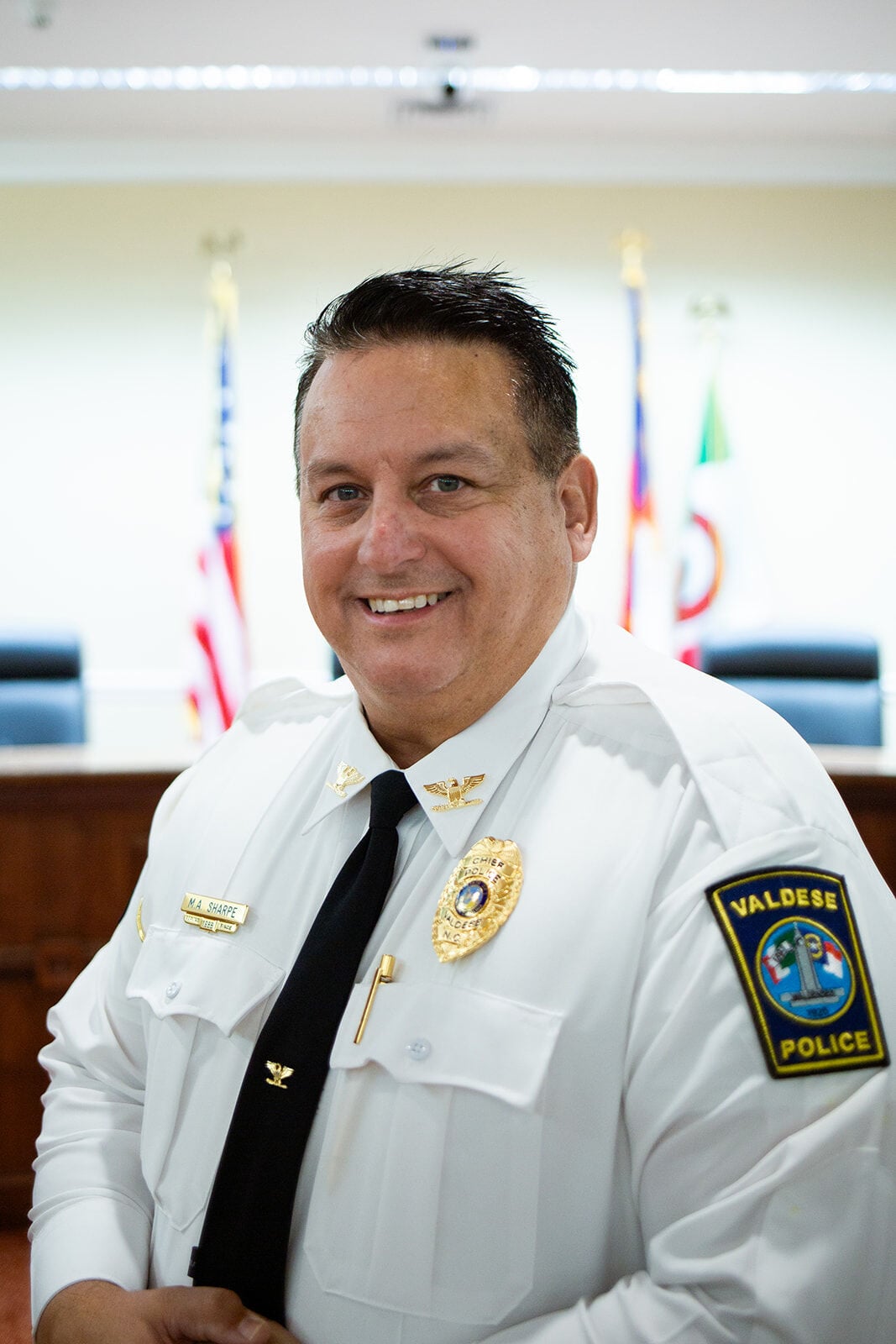
Sharpe
SARAH M SHARPE / FOR THE PAPER
During Sharpe’s time at the police department, he has ensured that all officers are CPR- and first aid-certified, created opportunities for officers to train in new skills such as public relations, and modernized officers’ equipment — including their rifles. Prior to upgrading, Valdese Police Officers used Vietnam-era rifles.
Sharpe said many of the department’s upgrades were funded by generous public donations.
Sharpe then shifted the tone of his presentation to discuss challenges.
INADEQUATE PAY
In the last eight months, two officers quit the Valdese Police Department to join better-paying agencies.
The most recent to leave, Jason Xaysana, joined a smaller police department that pays him $11,000 more per year, Sharpe said.
“We can’t compete with departments half our size,” Sharpe said. “And I’ll never forget this … I’m sitting there talking to him, trying to get him to stay and convince him that we have a good place, he said, ‘Chief, I can’t eat on what-ifs.’”
Fortunately, reserve officer Jonathan Kulp is ready to join the department as a full-time officer, Sharpe said, but he must finish his last few weeks of training before he can replace Xaysana. Sharpe added that scheduling is a nightmare for the department, which already struggles when even one person calls out sick.
Sharpe said the Valdese Police Department spent four years training Xaysana.
“What’s more embarrassing is I’ve got to look at a chief … who smiles and says, ‘I took one of your good ones,’ and I had nothing that I could do to keep him,” Sharpe said. “So, you have to start all over from the beginning and (get someone trained), and as soon as he gets to where he’s comfortable, he starts looking at his paycheck and says, ‘I can make more money elsewhere.’”
Mayor Pro Tem Rexanna Lowman asked how much money it takes to train an officer. Sharpe said, the expense of training one new officer can rise to about $100,000.
NO DEDICATED BUILDING
“I want you to pretend with me for just a moment, and if you will, close your eyes and listen to my voice,” Sharpe said.
Every council member closed their eyes. Many in the audience did as well.
Sharpe asked listeners to imagine they were parents whose child had just been sexually assaulted.
In the scenario, you take your child to what Sharpe described as a makeshift police department. The building has no dedicated interview room and an evidence room that barely meets state standards. There is no private space where you and your child can speak with officers.
Someone has to call in the chief or assistant chief who has already worked for 10 to 12 hours, for guidance and to file a report, because the two officers on duty are tied up responding to a car crash and a DWI arrest.
Eyes still closed, many listeners’ brows furrowed.
The chief directs you and your child to the hospital, Sharpe said, and contacts a nurse to meet with you while he is en route. He is on the phone, attempting to find a suspect and use neighboring agencies for help. When the suspect is located, the interview must be conducted in a borrowed room at a local church. Now the police department must find recording devices that meet state standards to conduct the interview, because no properly equipped interview room exists.
“Welcome to Valdese,” Sharpe said. “And this is only one case example. Is that the response you want for you and your child?”
NOT ENOUGH OFFICERS
Festivals, concerts, parades, and other public events stretch the police force thin, Sharpe said.
At Valdese’s 2024 Independence Day celebration, Sharpe said every officer was on duty patrolling downtown and some backroads in teams of two.
Eventually, Sharpe sent out a call for each team to get to their traffic stations to help funnel out the crowd.
“No sooner than I gave the command, we had a gentleman with a gun at a business, we had two car accidents occur, we had a four-person fight in front of another business downtown, and officers had to quickly run back to those areas,” Sharpe said. “No one made it to the traffic stations.”
There are currently four sergeants and six officers, counting new-hire Kulp. There are four reserve officers.
EVERY ISSUE IS IMPORTANT
No one issue outweighs the other, Sharpe said. They are all interconnected.
“Help us address the needs,” Sharpe said. “We have to pay more. … We must have officers to put in the facilities. We need facilities; we are outdated and not keeping up with technology and evidence requirements to meet today’s needs and mandates.”
Sharpe said that since his arrival two years ago, he has noticed Valdese “(plays) the blame game,” pointing fingers at who didn’t do this or that, whose responsibility it was, or whose fault it is. He said the town must work together to find solutions.
The agency must take care of residents “while maintaining a healthy, well-trained police department, and we just can’t do it with what we have,” Sharpe said.
The council was silent for a moment, processing everything Sharpe had said.
“Chief, I’ve had the opportunity since being elected to work with you side by side in this building,” Mayor Keith Huffman said. “You are a man of integrity. You are the epitome of service before self, and Valdese is great to have you. And that said, we’re going to work on this. The council here has heard you. … We’re going to do our very best, and that’s all we can offer. But we’re going to do something. This is no longer a ‘do nothing.’”
Councilwoman Heather Ward said the presentation hit close to home since she came from a law enforcement family.
“There are some hard decisions we’re going to have to make as a town in the next couple of months,” Ward said. “And I want to encourage (everyone), please share this … because people, they need to understand why we’re having to make some of the decisions we’re having to make right now.”
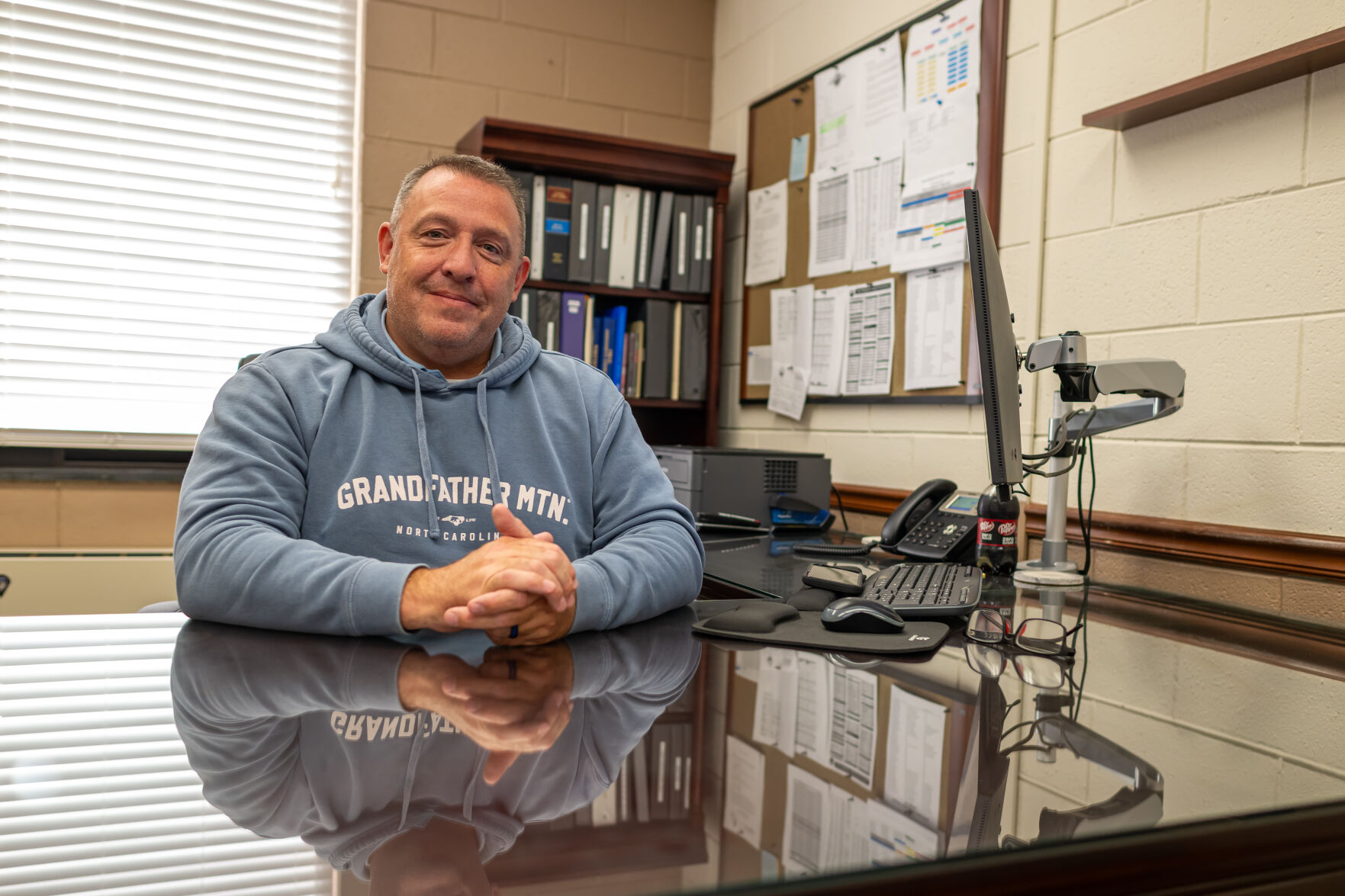
JACOB CHRISTOPHER / THE PAPER
The retiring captain sits comfortably at an empty desk, enjoying
his final working day. Brown at desk
Brown at desk
Page A1 | e-Edition | The Paper
JACOB CHRISTOPHER / THE PAPER
The retiring captain sits comfortably at an empty desk, enjoying
his final working day. Brown at desk
Brown at desk
Morganton
City considers automated garbage collection, keeps backyard pickup
By MADISON LIPE
madison@thepaper.media
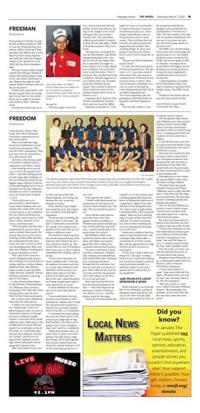
Sanitation employees for the City of Morganton lift more than
6,000 tons of garbage by hand annually. A pilot program could test
a more modern collection system.
FOR THE PAPER
Facing growing safety risks and competition for workers, Morganton officials are considering a new mechanically assisted garbage collection system that would cost residents an extra $2 per month while preserving one of the city’s most distinctive services, backyard pickup.
The proposed $2 monthly increase per household would raise the garbage fee to $168 annually. Residents would receive one free 95-gallon roll-out container and pay a certain rate if they need additional containers, though that rate has not yet been decided. The city would test the system in select neighborhoods before deciding on a citywide rollout, though those neighborhoods have not been identified.
If the program moves forward, the city will need to adopt a new ordinance requiring residents who use city garbage services to use standardized containers and outlining rules for the system.
The city citywide rollout would cost over $1 million. In the sanitation budget requests, $420,000 is listed for six garbage trucks and $600,000 for 95-gallon rollout containers for all residential customers. No exact implementation date for the pilot program has been determined, but if funded, Public Works Director Michael Chapman plans to start the pilot in the next couple of months.
The proposed change comes as sanitation workers’ exposure to hazards increases. Annually, the city’s sanitation employees lift more than 6,000 tons of garbage by hand, according to Chapman.
“Over the last five to 10 years, needles have become a big issue, broken glass, sharp metals, unknown bag contents, and animals in garbage containers,” Chapman said. “We’ve had employees get stuck with needles, had employees get cut with broken glass … We’ve also had issues with chemical burns and things like that.”
Chapman said when an employee is stuck by a needle, the process to ensure their health can be lengthy. In some cases, it can involve up to six months of blood tests and doctor visits, posing a significant health risk and liability for the city.
The new trucks would use a hook-and-dump system that lifts and empties containers mechanically, reducing the need for workers to handle garbage directly.
Morganton has offered backyard garbage collection since the 1970s and is one of about five municipalities in North Carolina, including Marion and other smaller communities, that still offer the service. The city intends to maintain backyard pickup even with the new equipment, Chapman said.
He said modernization could help with hiring and retention as Morganton competes with other municipalities and private companies that already use automated systems.
“We’re in competition with other municipalities and also private industry … Other folks may have an automated system or a mechanical system, and they pay roughly about the same thing. So, if you’re an employee and you want to be in a sanitation job, that’s the easier route,” Chapman said.
The pilot would distribute 150 City of Morganton garbage containers throughout small neighborhoods to test logistics, route compatibility, resident experience, and equipment performance before citywide implementation. The containers would be assigned serial numbers and tracked by address. The rollout would also be phased, so that existing equipment can be used throughout the pilot program.
“We feel that this is a good investment for the city’s future to enhance safety, address hiring, and retention challenges,” Chapman said. “It’s an upgrade and modernizing our equipment, while still providing the same backyard service.”
Click and hold your mouse button on the page to select the area you wish to save or print.
You can click and drag the clipping box to move it or click and drag in the bottom right corner to resize it.
When you're happy with your selection, click the checkmark icon next to the clipping area to continue.